
Technical Compliance
 ATEX (Explosive Atmosphere)
 Bovine-Free (TSE/BSE)
 Bureau Veritas (BV)
 DNV (Det Norske Veritas)
 FDA Approved
 Fire Safe (API 607)
 ISO 15848
 Lloyds Register (LR)
 REACH
REACH
 RoHS
RoHS
 SIL 3 (Safety Integrity Level)
 Ta-Luft (Air Quality)
 WRAS Approval
Need a copy of our certificates?
Request DocumentationAtex Certification
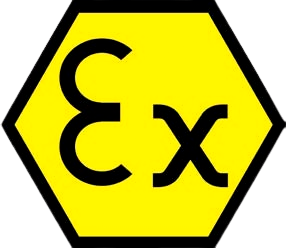
ATEX refers to European Union directives (Directive 94/9/EC and 99/92/EC)
designed to ensure the safety of equipment and workplaces in potentially
explosive atmospheres. The name ATEX is derived from the French
“ATmosphères EXplosives,” meaning “explosive atmospheres”.
These directives aim to prevent fires and explosions caused by flammable
substances like gases, vapours, mists or dusts in workplace environments.
ATEX certification indicates that a product has passed rigorous testing and
is deemed safe for use in specific environments with explosive atmospheres.
ATEX directives define “Ex zones” which are areas where the risk of explosion
is categorised based on the frequency and duration of the explosive atmosphere.
ATEX Zone Classification
ATEX zones are divided into two categories: gas/vapor zones (0, 1, 2) and dust zones (20, 21, 22).
These zones are classified based on the frequency and duration of an explosive atmosphere.
Gas/Vapour Zones
Zone 0: Explosive atmosphere continuously present or for long periods or frequently.
Zone 1: Explosive atmosphere likely to occur occasionally.
Zone 2: Explosive atmosphere not likely, and if it does occur, it will exist only for a short period.
Dust Zones
Zone 20: Explosive atmosphere continuously present or for long periods.
Zone 21: Explosive atmosphere likely to occur occasionally.
Zone 22: Explosive atmosphere not likely, and if it does occur, it will exist only for a short period.